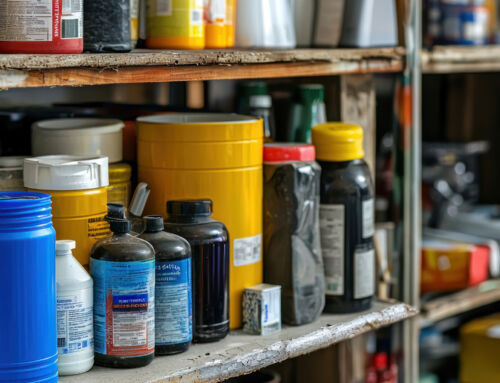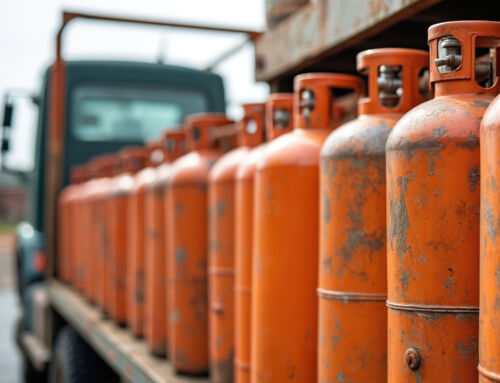

Household hazardous waste (HHW) is showing up on states’ and local jurisdictions’ radar, fueled by safety concerns and the exorbitant cost to manage these materials.
As batteries, vapes, compressed gas cylinders, and certain other products flood waste and recycling streams, they spark fires and injure waste workers while leaving governments to shoulder most of the cleanup costs.
In response, a few jurisdictions are looking at extended producer responsibility (EPR) laws, requiring producers to take responsibility for dealing with these materials at the end of life.
Vermont recently became the first state to pass a law creating an EPR program for HHW, targeting a sweeping mix of products. And California is working to follow suit. For now, other states are focusing on just a few product categories at a time. For example, Nebraska passed an EPR bill to take on batteries and has restricted vapes, while several states focus on paints, mercury-containing lighting, and/or mercury thermostats among product types.
As this movement rolls forward, some local governments are considering and drafting HHW EPR ordinances.
Beginning with Nebraska’s story, the state worked off a draft of a Wisconsin battery bill that was based on legislation in Illinois that looked to have teeth.
“It was supported by battery manufacturers, the waste and recycling industries, and other stakeholders. But especially important to us was the Wisconsin bill was drafted as a public safety bill rather than as simply another EPR bill,” says Nebraska Senator Jana Hughes, who championed the legislation.
The state’s so-called “Safe Battery Collection and Recycling Act” prohibits mixing covered batteries with other waste streams. Battery Stewardship Organizations (BSOs) must include detailed safety procedures in their plans, such as a process for collecting damaged and defective batteries. BSOs must provide safety training procedures to material handlers. And they are required to ensure labeling that identifies batteries’ chemistry and spells out proper disposal to consumers.
Onboarding scrap recyclers, battery manufacturers, and retailers initially took work.
“Retailers have heartburn when they hear extended producer responsibility. Part of what we were fighting is our neighbor, Colorado, has done a packaging EPR bill, and businesses were hearing about it and [skeptical] of such a law. We just kept saying, this is a very specific item. It’s a safety issue, and that ultimately brought them around,” Hughes says.
Battery producers and recyclers had their own concerns.
Scrap recyclers wanted the option to opt out of joining a BSO, and battery producers did not want to incur costs when operators chose not to participate, Hughes recalls.
So came a compromise: recyclers could keep processing batteries as they had been outside of the BSO, with the BSO sustaining no expense on these businesses’ behalf. Recyclers who choose not to join simply must report their activity to the state.
The proposed legislation moved fast, first introduced to the legislature on January 15, 2025, and landing on the governor’s desk May 14 with a final read vote of 43-6. It was signed into law May 21.
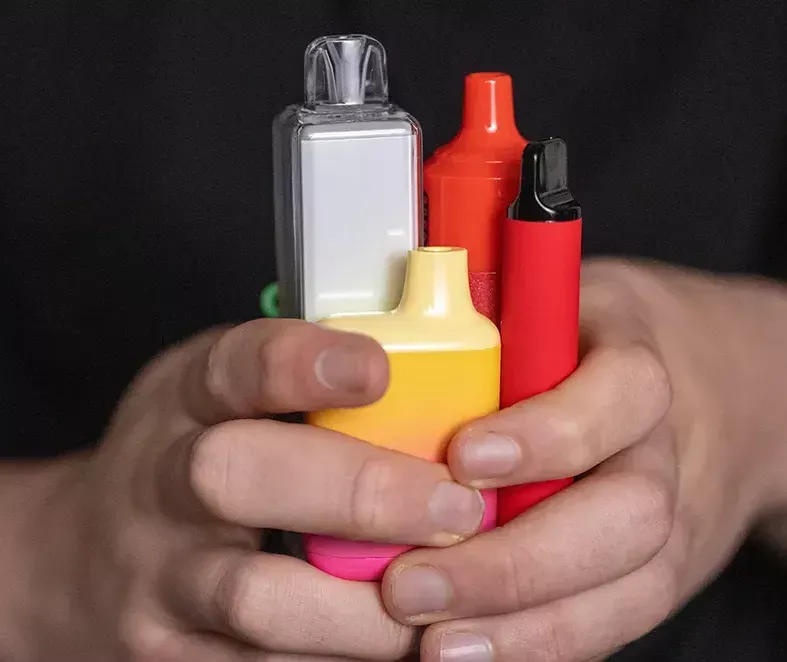
Nebraska also regulates vapes, which are garnering more attention as hazards, found to contribute to a roughly 20 percent increase in reported fires at North American waste and recycling facilities in recent years.
Nebraska’s multi-pronged approach requires manufacturers to register them, bans online sales for delivery, and bans the sale of vapes that would be marketed to kids.
An impetus for this law—besides curbing a spiraling waste stream and fires—was to keep these devices out of kids’ hands in light of a swelling epidemic among youth.
“We had a third grader bring a vape to a public school that was designed to look like a sippy cup. There was no reason on the planet why a product intended to be used by adults over 21 years of age needs to look like a sippy cup. It was largely because of incidents like these that we stepped in and passed LB 1296,” Hughes says.
Some local governments are taking action too, also restricting electronic cigarette sales. California has been especially aggressive, with dozens of jurisdictions full out banning these devices.
In February 2025, California Senator Ben Allen introduced a statewide HHW EPR bill now under review—and it’s far more encompassing than a few product types. If passed, SB 501 would regulate and require producers to pay for the management of roughly 10 product categories, from pesticides to aerosols, adhesives, and degreasers.
California already has EPR for certain HHWs.
SB 501 will utilize the lessons learned from those laws and programs to address the remaining most toxic and expensive to manage HHW products, says Heidi Sanborn, founding executive director of the National Stewardship Action Council, a bill sponsor.
“At the same time, it will shift costs off local governments and ratepayers, expanding convenient collection, reducing fire/toxicity risks, and encouraging safer product design,” Sanborn says.
Cal-Waste Recovery Systems speaks from the frontline of impact. The 200-plus employee business only collects and processes curbside recycling bins, yet in 2023 removed 183,000 pounds of HHW from the sort line, reports Rudy Vaccarezza, the company’s owner.
“The danger this poses to our workers and the contamination of food-grade materials from hazardous items should be of utmost concern to us all,” he says.
Vermont’s “Household Hazardous Products Stewardship Law,” slated to launch in 2026, also includes an extensive list of covered products. They fall under two dozen-plus categories.
For years, the state’s solid waste districts have borne most of the cost to deal with these materials and have been feeling the pain. Some towns are spending $100 to $400 per carload to collect and dispose HHW, says Josh Kelly, solid waste program manager, Vermont Department of Environmental Conservation.
“Costs to manage these materials has doubled over the past 30 years, which has left our municipalities stuck, as they do not want to charge people more to do the right thing. Plus, we know imposing high costs to properly manage these materials would lead to dumping or hoarding,” Kelly says.
Now producers will be required to pick up the slack, paying for collection, sorting, treatment, and safe disposal of covered products.
Implementation has been challenging.
No producer responsibility organization (PRO) has applied that meets the state’s requirements to run the program. So, Vermont’s Agency of Natural Resources will administer the program itself and will bill manufacturers for staff time and program costs.
Getting to this point took years. It entailed extensive discussions with multiple stakeholders to ensure bill language that accounted for funding approaches, transparent reporting, and other considerations.
Reflecting on the journey, Kelly’s advice to states exploring HHW EPR is communicating early is key.
“We had discussions between state solid waste and hazardous waste professionals to determine what products will be covered. Conversations between the state and municipalities have been as important, as the state directs municipalities to collect HHW.
“Finally, we found it very beneficial to talk to manufacturers about issues such as how they can feel confident that they know just what they will be paying for.”
Even as stakeholders across the spectrum come into alignment, there is more to consider in the design of a successful program. No less of which is establishing key performance indicators to be tracked by the stewardship program.
The Lubricant Packaging Management Association (LPMA) runs an EPR program for producers of petroleum and automotive products.
David Lawes, CEO of LPMA, suggests anyone thinking about setting up a HHW EPR program should focus on three indicators: measurement of covered materials sold and collected; ease and accessibility for consumers; and public awareness of the program, including how to participate.
“A successful program starts with tracking how much material is sold and collected. But it’s just as critical to make participation easy and ensure people know how to engage,” says Lawes.
“Collection rate, convenience, and awareness drive meaningful environmental outcomes.”

Author:
Arlene Karidis
Freelance writer
Waste360