
Carpet Recycling
The Extended Producer Responsibility for Carpet Law, Article 27, Title 33 of the Environmental Conservation Law, went into effect on December 28th, 2024. This critical extended producer responsibility law requires carpet producers to fund a convenient carpet collection program at no cost to NYS consumers, with program launch targeted for July 1st, 2026.
The law establishes increasing recycling rates for programs to achieve, phases out PFAS chemicals in the production of new carpet, requires new carpet be manufactured with increasing percentages of post-consumer recycled material, as well as sets specific goals for closed-loop recycling that will lead to the development of a more circular economy for the carpet industry.
DEC is exercising its authority to utilize enforcement discretion with respect to certain specific dates and deadlines in provisions of the law, through an enforcement discretion letter (PDF) issued December 19, 2025, with additional clarifications provided January 22, 2026.
Carpet Covered by the Law
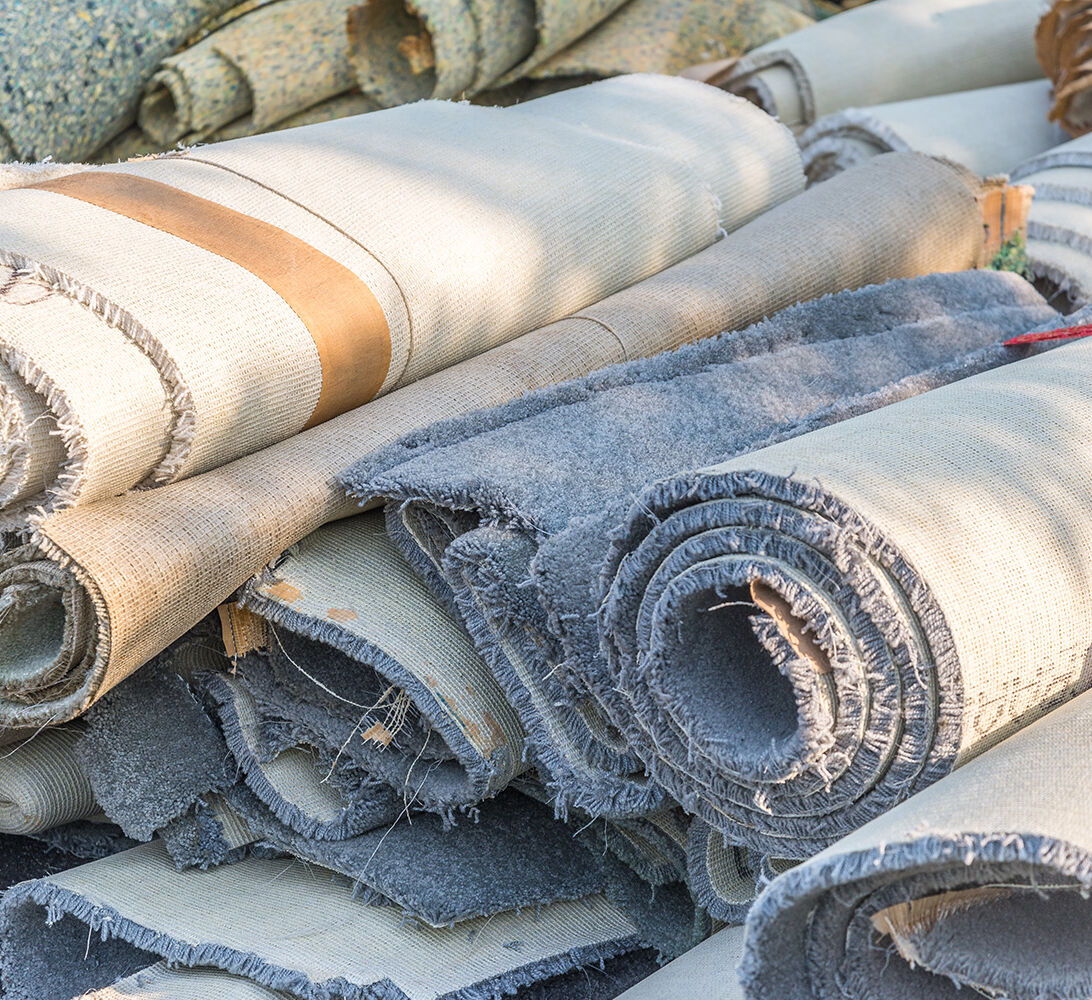
Carpet is a manufactured article used by consumers, attached or placed on the floor or walking surface as a decorative or functional feature, and is primarily made of a top surface of synthetic or natural fibers, yarns, or tufts attached to a backing system made of synthetic or natural materials. Carpet covered by this law includes, but is not limited to:
- Broadloom carpet
- Modular carpet tiles
- Artificial turf
- Pads or underlayment used in conjunction with carpet
The law does not cover: handmade rugs, area rugs, or mats.
Producer/Representative Organizations Responsibilities
A carpet producer or its representative organization must submit to the Department for approval a carpet collection program plan addressing the various requirements set forth in the law. On and after July 1, 2026, a producer may not offer for sale carpet in the state unless it is participating under an approved program plan. Producers are responsible for all costs associated with the implementation of their carpet collection programs. A producer or its representative organization must also provide an outreach and education program to inform consumers, carpet installers and others engaged in the management of discarded carpet of their opportunities available through the approved program. Carpet producers must comply with applicable labeling and design requirements as well.
A producer or its representative organization is also responsible for submitting annual reports detailing prior program year results and compliance with minimum performance metrics (i.e., minimum post-consumer recycled content, recycling, and closed-loop recycling rates) as set in statute:
- 1 year after the original program plan is approved by the Department:
- all carpet sold shall be manufactured with at least 10% post-consumer recycled content
- 5 years after the original program plan is approved by the Department:
- All carpet sold shall be manufactured with at least 20% post-consumer recycled content
- Producers shall achieve a 30% recycling rate, of which 10% shall be closed loop
- 10 years after the original program plan is approved by the Department:
- All carpet sold shall be manufactured with at least 30% post-consumer recycled content
- Producers shall achieve a 50% recycling rate, of which 20% shall be closed loop
- 15 years after the original program plan is approved by the Department:
- Producers shall achieve a 75% recycling rate, of which 40% shall be closed loop
A producer will be liable for surcharge penalties of $.25 per pound if recycling rate minimums are not achieved. Please review the law for a comprehensive list of requirements applicable to a carpet producer and its representative organization.
Retailer Responsibilities
Retailers may not sell or offer for sale carpet in the state unless the producer of the carpet is participating in a carpet collection program. Retailers may also voluntarily participate as a designated collection site in a carpet collection program. Please review the law for a comprehensive list of requirements applicable to carpet retailers.
Important Dates
- December 28, 2024 – Law went into effect
- January 1, 2025 – An advisory board is to be appointed by members of the Executive and Legislature to make recommendations regarding program plans (delayed – additional information to be posted as soon as possible)
- December 31, 2025 – Producers and representative organization(s) must submit carpet collection program plans to the Department for approval
- Any new carpet producers after this date must submit a plan before selling carpet
- Plans are accepted or rejected within 90 days
- July 1, 2026 – Implementation of carpet collection program(s)
- Producers cannot sell carpet into the state unless participating in a collection program
- Retailers may not sell carpet unless the producer of the carpet is participating in a carpet collection program
- December 31, 2026 – No carpet offered for sale shall contain or be treated with PFAS substances for any purpose
- July 1, 2027 – first program annual reports are due to the Department
Complete Extended Producer Responsibility for Carpet Law Timeline (PDF, 69 KB)
6 NYCRR Subpart 368-4 Extended Producer Responsibility for Carpet Law Rulemaking
DEC is developing new 6 NYCRR Subpart 368-4 regulations to support implementation of the Extended Producer Responsibility for Carpet Law.
On June 11, 2025, DEC held a pre-rulemaking stakeholder meeting to present initial regulatory concepts under consideration and seek stakeholder feedback. A recording of the meeting and slide deck are available:
- Carpet EPR Pre-Rulemaking Stakeholder Meeting Recording
- Carpet EPR Pre-Rulemaking Stakeholder Meeting Slide Deck (PDF, 1.27 MB)
Additional opportunities to participate in this rulemaking will be posted here.

Contact:
DMM, Bureau of Waste Reduction and Recycling
625 Broadway
Albany, NY 12233